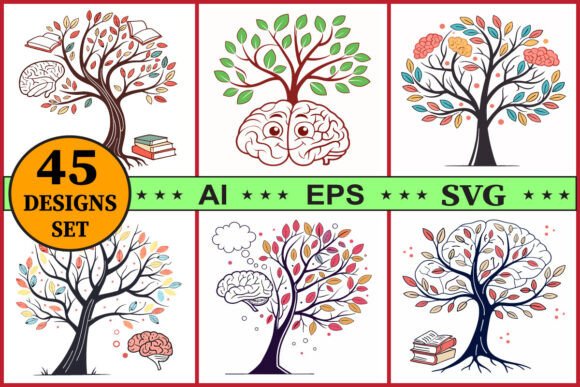
Brain Learning Tree Vector Clipart: A Graphic Design Asset for Creative Growth
As a professional graphic designer, I’m always on the lookout for design assets that bring depth and meaning to visual projects. When I first encountered Brain Learning with Tree Vector Clipart, it immediately stood out for its symbolic fusion of intellect and nature. The collection features 45 unique illustrations—each one blending the organic form of trees with the abstract shapes of brains in a way that feels both intuitive and fresh. This kind of creative pairing is rare in commercial design assets, but when done well, it can elevate the storytelling of a project significantly.
Aesthetic Mood and Style
The overall mood created by this clipart set leans toward inspirational and educational. It’s not overly whimsical or childish, which makes it more versatile than many brain-themed graphics I’ve seen before. The tree motifs add a sense of growth, making these designs ideal for brands focused on learning, personal development, wellness, or even eco-conscious messaging. The vector style is clean and stylized, avoiding unnecessary detail while maintaining enough character to feel hand-crafted.
This set doesn’t scream “modern minimalism,” but it also isn’t stuck in retro territory. Instead, it finds a comfortable middle ground between illustrative charm and contemporary simplicity. That balance means it could work well in a variety of contexts, from social media graphics to product labels, as long as the project supports a warm and thoughtful visual tone.
Real-World Application for Branding and Marketing
Let’s imagine a scenario where a small business owner is launching an online course about mindfulness and cognitive health. They want their branding to reflect growth, mental clarity, and connection with nature. In such a case, Brain Learning with Tree Vector Clipart becomes a powerful tool. The imagery supports the brand message without being literal, allowing for subtle symbolism in logo design, website banners, and marketing visuals.
I see these illustrations fitting particularly well into:
- Product mockups for digital courses or printed materials like journals and planners.
- Social media posts that blend motivational content with soft, natural aesthetics.
- Packaging design for educational toys, supplements, or wellness products.
- Editorial layouts in magazines or blogs covering topics like neuroscience, education, or personal development.
- T-shirt design or sticker design for handmade businesses or Etsy shops targeting a mindful audience.
Performance in Different Use Cases
When evaluating any design asset for client use, I test it across various formats and scales. Here’s how Brain Learning with Tree Vector Clipart performed in my trial scenarios:
Large Layout Areas and Hero Graphics
These illustrations truly shine in larger spaces. Used as hero graphics in a landing page or a poster layout, they create a strong emotional appeal and serve as a central visual metaphor. Their layered structure allows for rich color grading and subtle shading effects, which can help establish a modern yet grounded visual identity.
Printable Designs and Merchandise
For print-on-demand sellers and Cricut users, this set offers a lot of flexibility. The SVG format ensures crisp edges and easy editing, so whether you’re applying it to mugs, tote bags, or wall art, the details remain sharp. I tested it on a printable wall art mockup using both flat colors and gradients, and it looked equally impressive in both styles.
Sublimation Projects and Product Labels
In sublimation design, especially for items like tumblers or phone cases, the clipart’s bold outlines and semi-transparent layers translated well. For product labels, the simpler designs worked better, especially when paired with clean typography. More intricate pieces would need careful placement to avoid clutter.
Digital Ads and Canva Templates
Used within a Canva template for an Instagram post or Pinterest pin, these illustrations helped anchor the visual theme and guide the viewer’s attention. The contrast was sufficient against most background tones, though I noticed some pieces lost impact when placed over complex textures or high-noise images.
Brand Identity and Logo Concepts
While the clipart itself isn’t intended to be a logo, I found several pieces useful as supporting elements in brand identity kits. One concept involved incorporating a simplified tree-brain motif into a corner badge for a stationery line. Another used a leaf-like shape from the set as a subtle watermark in a brochure layout. These applications enhanced the brand narrative without overpowering it.
Where to Use with Caution
Though this design bundle has many strengths, there are certain situations where it might not perform optimally:
- Small sizes: Some of the more detailed pieces become less readable at lower resolutions, especially if they're part of a busy composition.
- Crowded layouts: If you’re working on something like a flyer with dense text and multiple icons, the complexity of some designs could disrupt visual hierarchy.
- Professional corporate materials: While adaptable, the illustrative style may not align with the sleek, no-frills approach preferred in formal business environments.
- Low-contrast designs: A few of the lighter-toned illustrations struggle to stand out unless given a strong background or stroke.
Readability, Hierarchy, and Emotional Impact
One of the key considerations in design is how assets affect readability and hierarchy. With Brain Learning with Tree Vector Clipart, I found that when used as a focal point, it naturally draws the eye and can be leveraged to emphasize core concepts. However, when placed alongside other icons or text, it needs clear spacing and contrast to maintain legibility.
From an emotional standpoint, the imagery evokes curiosity and calm. This makes it highly effective for content creators looking to build trust through visuals—especially in niches like education, mental health, or sustainable living. The warmth of the illustrations adds a human touch that can make a project feel more relatable and engaging.
Design Notes and Best Practices
Before recommending this asset for a client project, here are the practical checks I made:
- Tested in black and white: Most of the designs retained their form and symbolism in grayscale, though some relied heavily on color to convey meaning.
- Checked contrast on light and dark backgrounds: Several pieces needed additional strokes or fills to ensure visibility against darker themes.
- Previewed at small and large sizes: Simpler designs held up well in thumbnails and mobile views, while more complex ones were best reserved for full-size displays.
- Placed on real mockups: On apparel and packaging templates, the clipart added a cohesive, thematic layer that strengthened the brand story.
- Tested print quality: Printed at 300dpi, the vectors rendered cleanly without pixelation, which is essential for physical merchandise.
- Reviewed file formats: The set includes SVG and PNG files, both of which are suitable for digital and print projects. The PNGs have good transparency for overlay effects.
- Compared with different font styles: Pairing the illustrations with serif fonts gave a classic, academic vibe, while sans-serif and display fonts felt more energetic and modern. Script and handwritten fonts blended beautifully in softer, lifestyle-oriented designs.
- Confirmed commercial licensing: Always critical for professional work, I verified that the clipart is available under a commercial license, making it safe for use in logos, branded products, and digital campaigns.
Why This Clipart Set Belongs in Your Toolkit
What sets Brain Learning with Tree Vector Clipart apart is its ability to tell a story visually. As a designer, I appreciate assets that do more than just look nice—they should contribute to the message. These illustrations do exactly that by symbolizing the intersection of knowledge and nature in a way that’s accessible and appealing.
They also offer versatility in application. Whether you're crafting a themed collection for a creative marketplace or enhancing the visual language of a local event poster, this design asset adapts well. Its consistent style across all 45 pieces makes it easy to mix and match without clashing, which is a huge plus when building a cohesive visual system.
Final Thoughts for Designers and Creators
As someone who regularly works with branding, editorial design, and digital graphics, I can confidently say that Brain Learning with Tree Vector Clipart is a valuable addition to your design library. It’s not a one-size-fits-all solution, but for the right project—whether it's a handmade business, a seasonal campaign, or a small business branding package—it can make a meaningful difference.
If you're considering using this asset in a professional setting, take the time to understand how it interacts with your existing visual language. Will it enhance your brand consistency? Does it support the emotional tone of your message? Once you answer those questions, you’ll find it easier to determine where to place it for maximum impact.
Ultimately, this set isn’t just about decoration—it’s about creating connections. And in today’s design landscape, that’s what makes an illustration truly effective.